
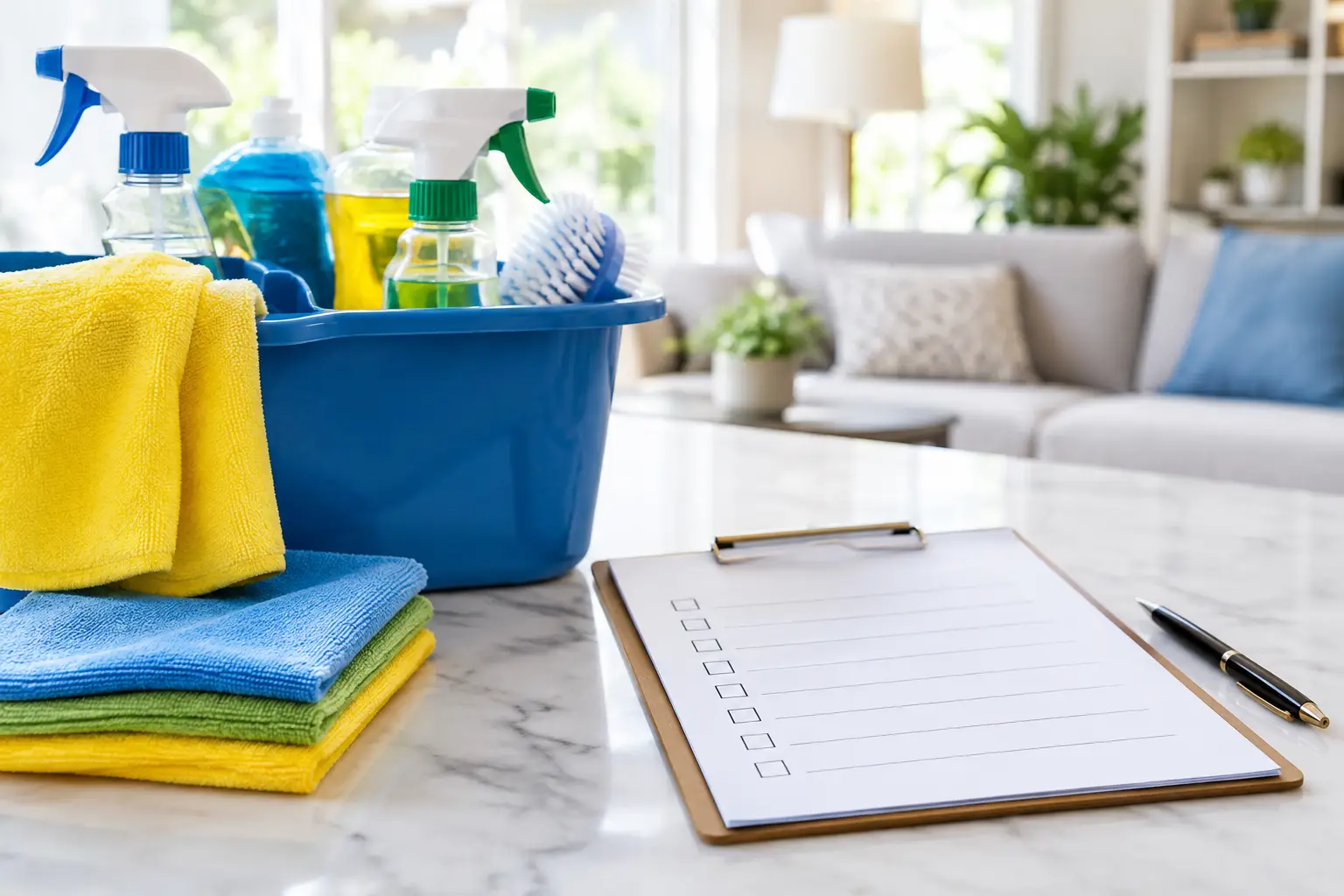
A clean home rarely comes from finding one spare Saturday and trying to do everything at once. It comes from a clear routine, sensible priorities and knowing what can wait. If you have searched for a “professional house cleaning checklist printable free”, this room-by-room guide gives you a practical plan you can print, keep on the fridge and adapt to your household.
Professional cleaning is not about making a home look staged. It is about creating a fresh, comfortable space that works for the people living in it. Some homes need daily attention around children, pets or cooking. Others only need a weekly reset alongside a little light tidying. The best checklist is the one that fits your life rather than adding another impossible standard to it.
Before You Start: Work Like a Professional
Begin at the highest point in each room and work downwards. Dust first, then clean surfaces, then vacuum or mop the floor last. This avoids doing the same job twice and makes the whole process feel more manageable.
Bring your supplies with you in a small caddy where possible: cloths, a duster, bathroom cleaner, disinfectant, glass cleaner, a scrubber, bin bags and your vacuum attachments. Use separate cloths for the kitchen and bathroom, and follow the instructions on each product. A clean cloth and a few minutes of contact time often matter more than using a stronger cleaner.
Open a window if the weather allows, particularly in bathrooms and kitchens. Fresh air helps rooms dry properly and makes a noticeable difference to how a home feels when you walk back in.
Professional House Cleaning Checklist Printable Free
Print this checklist and tick off the tasks that suit your regular cleaning day. There is no need to complete every deep-cleaning job each week. Aim for the essentials first, then add the occasional tasks when time allows.
Whole-home routine
- [ ] Open windows briefly to air rooms where appropriate.
- [ ] Put away items left on floors, tables and worktops.
- [ ] Empty household bins and replace liners as needed.
- [ ] Dust accessible surfaces, picture frames, shelves and skirting boards.
- [ ] Wipe light switches, door handles and other frequently touched areas.
- [ ] Remove cobwebs from corners, ceilings and light fittings where safely reachable.
- [ ] Vacuum carpets, rugs, stairs and upholstered furniture.
- [ ] Sweep and mop hard floors, paying attention to edges and under tables.
- [ ] Straighten cushions, fold throws and make beds.
Kitchen checklist
The kitchen benefits from regular attention because small spills can quickly become sticky, and food preparation surfaces need careful cleaning. Start by clearing the worktops, then clean from the least soiled area towards the sink and hob.
- [ ] Wash up, load or empty the dishwasher.
- [ ] Wipe and disinfect worktops and the dining table.
- [ ] Clean the sink, taps and draining board.
- [ ] Wipe the hob, splashback and fronts of kitchen cupboards.
- [ ] Clean the microwave inside and out.
- [ ] Wipe appliance exteriors, including the kettle, toaster and fridge handle.
- [ ] Empty the kitchen bin and wipe it if needed.
- [ ] Vacuum or sweep the floor, including beneath the table.
- [ ] Mop the floor once loose crumbs and debris have been removed.
If you have a busy family kitchen, a daily wipe of the worktops, sink and hob can make the weekly clean much easier. For less-used kitchens, a thorough weekly clean may be enough. It depends on how often you cook at home and how many people use the space.
Bathroom and cloakroom checklist
Bathrooms need a methodical approach. Apply cleaner to the toilet, shower and basin first, then allow it to work while you clean mirrors, fittings and surfaces. Finish with the floor so you are not walking over an area you have already cleaned.
- [ ] Clean and disinfect the toilet, including the seat, lid, rim and flush handle.
- [ ] Clean the basin, taps, plughole and surrounding surface.
- [ ] Clean the shower tray or bath, screen and taps.
- [ ] Polish mirrors and any glass surfaces.
- [ ] Wipe shelves, cabinets and toiletries that gather dust or residue.
- [ ] Replace used hand towels with fresh ones.
- [ ] Empty the bathroom bin.
- [ ] Vacuum or sweep the floor, then mop it.
Limescale is often the job that needs more patience than effort. In hard-water areas, build a short limescale check into the weekly routine rather than waiting for heavy marks to form. Always choose a product suited to the material you are cleaning, especially on natural stone, plated fittings or delicate shower screens.
Bedrooms checklist
A bedroom should feel calm, not over-cleaned or full of fragrance. Focus on dust, floors and fresh bedding, while keeping personal belongings respectfully in place.
- [ ] Make the bed or change bedding where scheduled.
- [ ] Dust bedside tables, chests of drawers and accessible surfaces.
- [ ] Wipe mirrors and wardrobe doors where required.
- [ ] Empty small bins.
- [ ] Vacuum carpet or mop hard flooring, including under the bed where accessible.
- [ ] Tidy cushions, throws and clothes left out for the day.
Changing bed linen weekly suits many households, though this may be more frequent for young children, pets, allergies or hot weather. Pillows, duvets and mattress protectors can be added to a monthly or seasonal plan instead of making them part of every cleaning day.
Living room and hallway checklist
These are often the spaces that shape the first impression of a home. They also collect dust, shoes, crumbs, pet hair and everyday clutter surprisingly quickly.
- [ ] Dust coffee tables, side tables, shelves and media units.
- [ ] Wipe remote controls, light switches and door handles.
- [ ] Vacuum sofas and chairs with the upholstery attachment.
- [ ] Fluff cushions and fold blankets.
- [ ] Clean mirrors and glass tables carefully.
- [ ] Vacuum rugs, carpets, edges and corners.
- [ ] Mop hard floors in the hallway or living area.
- [ ] Tidy shoes, coats, bags and post from entrance areas.
Add These Jobs Monthly or Seasonally
A professional standard does not mean moving every piece of furniture each week. It means recognising which jobs need regular care and which are better scheduled less often. Trying to complete everything every time can make cleaning feel exhausting and can lead to the important basics being missed.
Once a month, consider cleaning inside the microwave, wiping cupboard fronts more thoroughly, dusting blinds, vacuuming under sofa cushions and cleaning internal doors. Every few months, add tasks such as washing skirting boards, cleaning behind movable furniture, descaling the kettle, cleaning the oven, washing curtains if suitable and checking extractor fan covers.
For households with pets, long hair, muddy boots or lots of children’s activities, floors and upholstery may need extra attention. For a one-person flat with limited cooking, the kitchen and bathroom may be the main priority. Adjusting the plan is not cutting corners. It is simply putting your time where it makes the greatest difference.
When a Checklist Is Not Enough
A checklist is helpful because it removes the question of where to start. But it cannot create more hours in the week. When work, school runs, caring responsibilities and family time are already full, cleaning can become the task that is always postponed or squeezed into the least relaxing part of the weekend.
That is where regular professional support can make everyday life feel lighter. At Five Point Cleaning, we take care of the cleaning with the same care we would want in our own homes, so you can return to a space that feels properly looked after.
Keep this checklist visible, choose the jobs that matter most this week, and let a clean, orderly home support the things you would rather be doing.